What is a Home?
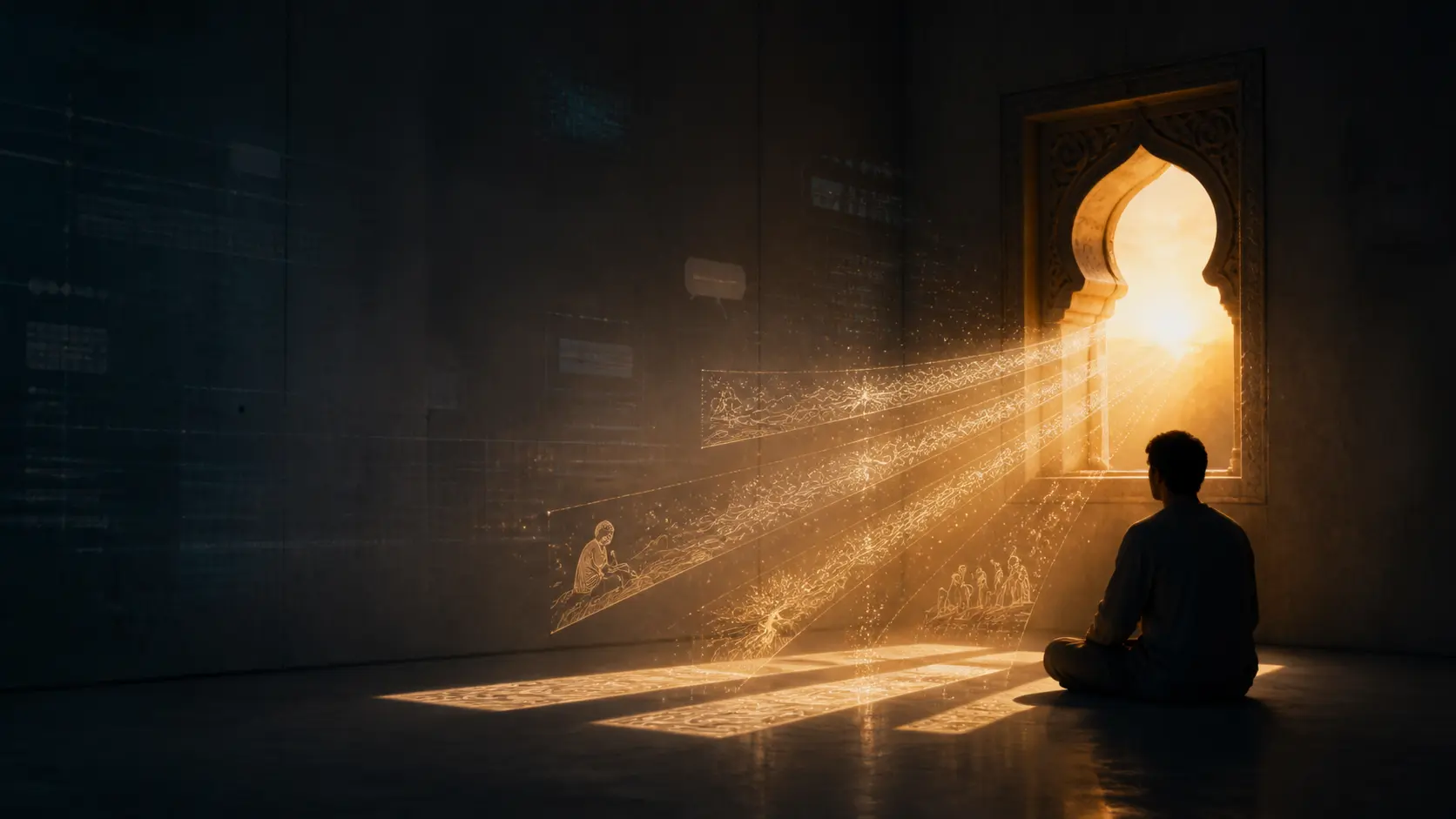
Throughout history, humans have always built shelters based on their geographic surroundings, available materials, and tools to find a sense of security and peace. Yet, a human “home” is not restricted to walls, doors, and a roof. Just as we need physical shelter, we profoundly need a “home” made of meaning. In this sense, “home” refers to the framework through which we understand the world. It is within this structure that the events surrounding us become meaningful. Our system of values—the foundation for every decision, large or small—is defined within this framework. Fundamentally, our perception of ourselves, our traits, and our priorities are all forged within the heart of this home.
In the pre-modern world, the pillars of this “home of meaning” were remarkably sturdy. Everything was, more or less, transparent. The boundaries between right and wrong, the “self” and the “other,” the acceptable and the unacceptable, were clear. However, with the onset of modernity, the expansion of communication, and the growth of human awareness regarding alternative frameworks, the situation changed radically. We slowly learned that our traditional home was not the *only* one. Other homes existed. Moreover, the individualism and freedom of the new era granted us the right to become seekers—to search for new homes and to build our own. The *spirit of the age* (Zeitgeist) began to view passivity and dwelling in the homes of our ancestors as something to be discouraged—a form of “inauthentic living.”
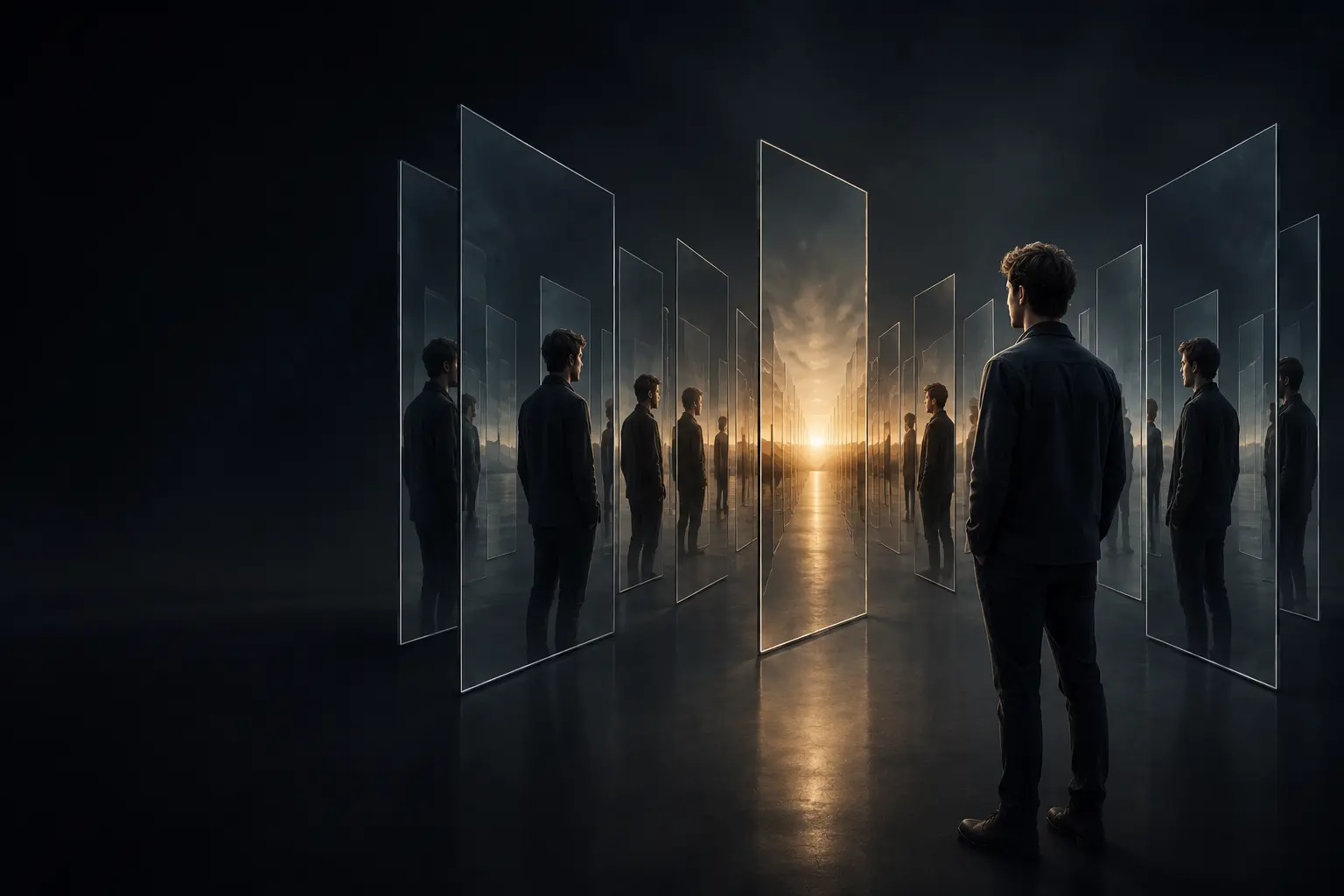
The beginning of this adventure was exhilarating. We gained the ability to experience new things and view the world through the eyes of a Buddhist, a Christian, or even an atheist. We could compare Eastern perspectives with Western ones—however vague these generalizations might be—and curate the advantages of each for our personal collection to lead an *authentic life*. What could be better? Yet, this exciting start did not have a pleasant outcome. Gradually, we realized that these homes belonged to different, and sometimes conflicting, systems; constructing a coherent whole from them was no easy task. The situation grew dire as we found ourselves facing a vast array of newly constructed options, too numerous to examine. We were left in a state of wonder, disorientation, and frustration.
The Homeless Mind
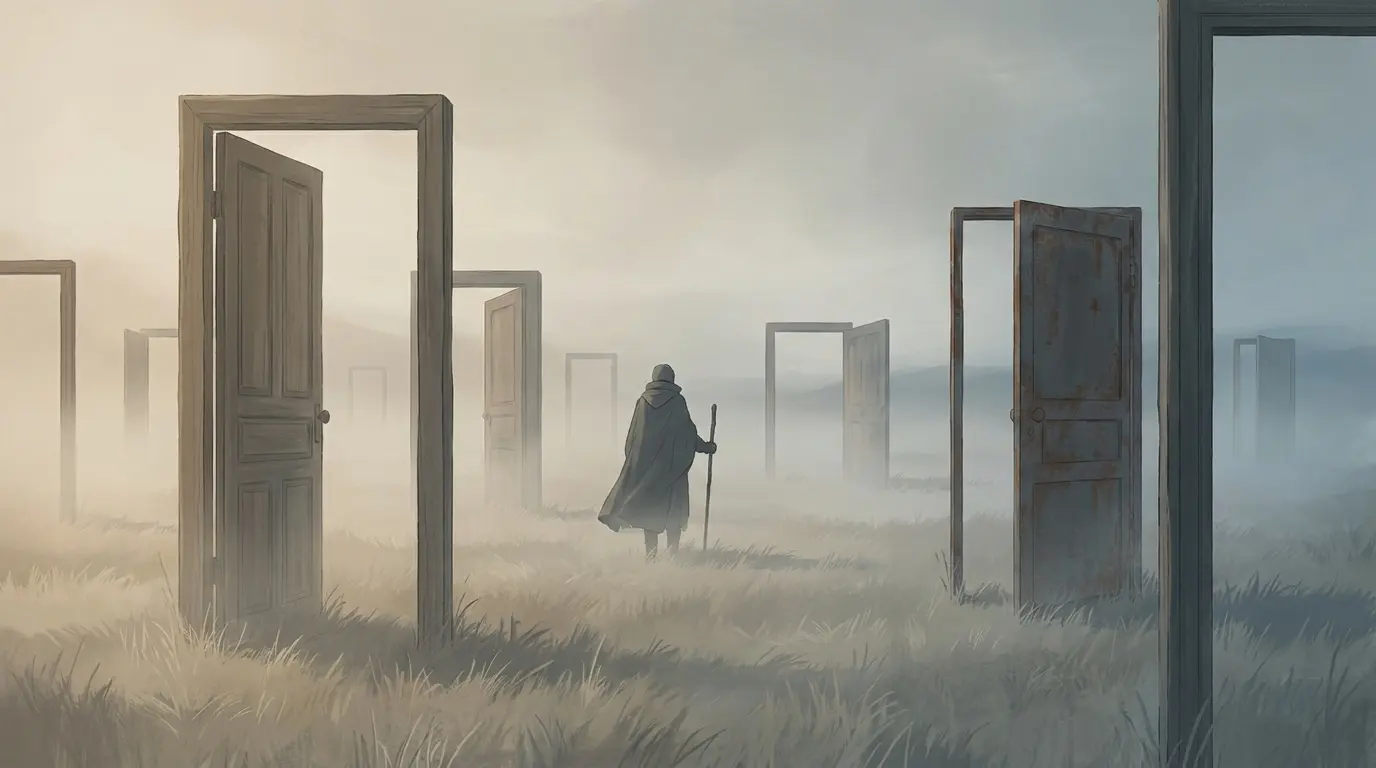
This is where Peter Berger (and others) offers a precise concept to describe our condition: *The Homeless Mind*(1). We have become homeless. It seems we find our previous homes no longer entirely suitable, yet we are unable to build a new one. What should we do in this limbo?
Some, unable to bear the heavy burden of doubt, turned to fundamentalism. From their perspective, the path must be sought in a form of *primordialism*. We must return to the ancestors; there, everything is clear, the boundaries between good and evil are distinct, and the home of meaning is solid. This path, of course, is not acceptable to many, who argue that what has been seen cannot be “unseen,” and the experience of the new world cannot be rolled back.
In such a challenge, Berger proposes the idea of *inductive theology*—an approach in which one navigates their earthly life while remaining attuned to “signals of transcendence,” through which they may reach religious beliefs regarding the nature of existence. In his view, this approach stands in contrast to two other solutions: the return to religious orthodoxy and the reductionist secular approach (2). Berger’s inductive perspective has the merit of being compatible with the inquisitive and empirical nature of modern humans, yet it still faces the challenge of pluralism and the problem of uncertainty.

Another thinker who has conceptualized this space is Charles Taylor. In introducing the secular (in his third sense), Taylor refers to religion as an *option* among others. Here, religion does not necessarily suffer a decline in belief, nor does it lose its socio-political standing; rather, it becomes an option that the inquisitive modern human may choice (3). In this view, religion is not synonymous with primordialism; Taylor does not support the idea of returning to the past. He believes we live in a *post-secular* age, where the hegemony of the grand, subtractive narrative of secularization has waned. This does not, however, mean a return to pre-modernity. In his view, we must recover our possibilities within these new conditions (4).
Examining contemporary culture, Taylor calls our time the *age of authenticity*—an era in which humans follow a type of individualism where the ideal of life is shaped based on the individual’s inner understanding, desires, and patterns, rather than externally imposed ideals. Taylor believes that despite the positive aspects of the ideal of authenticity, we must be wary of its defective forms, which offer an atomistic and isolated conception of the human. Human nature, identity, and understanding are inherently collective and dialogical (5). To him, the “other” is not an obstacle to my selfhood, but rather a possible source of inspiration that can enrich my life. Accordingly, the “homeless” human, to escape this state, can be open to the other, exposed new horizons through dialogue and understanding, and hence, through a slow and steady process, build a new home of meaning.
Alasdair MacIntyre offers a similar view. In his opinion, contemporary humans suffer from fragmentation and moral relativism. To escape this, and to create coherence, we must remember that humans are *narrative creatures*—we need to live within the heart of a narrative, a tradition, and a community (6). This reinforces the importance of dialogue with the “significant other,” reminding us that our human life is not shaped in a vacuum or isolation.
What Are We to Do?
Beyond previous proposals like “inductive theology,” “dialogue,” and “belonging to a narrative and a tradition,” what can we tell the bewildered human of our age? The human who, every day, encounters new scientific discoveries, is filled with wonder, and is left astonished by the ever-increasing array of new cultures and “isms”? In such an atmosphere, how can we answer the question, “Who am I, and what am I doing here?” And more importantly, how much can we trust that answer to build our lives upon it?
Perhaps the first step is to accept a difficult reality: we live in an era of uncertainty. Clear boundaries and absolute principles are rarely found today, and we must learn to live with probabilities and ambiguity. In the traditional world, few people had such awareness; they did not see themselves as confined to pre-defined frameworks. For instance, Ibn Arabi says:
*”Beware of being bound by a specific creed, rejecting everything else, for much good would escape you; indeed, the knowledge of the reality would escape you. Be in yourself like raw matter (hayula) for all forms of beliefs; for God is far broader and greater than to be confined by one creed rather than another…”* (Fusus al-Hikam)(7).
How many people can live like Ibn Arabi? The capacity to live with ambiguity is a psychological trait that stands in contrast to *cognitive rigidity*. Some individuals have a greater capacity for tolerating probability and uncertainty than others. Nevertheless, it seems that by cultivating certain *epistemic virtues*, one can partially overcome this challenge. One such virtue is *epistemic humility*. Self-awareness regarding the limitations of human knowledge paves the way for this humility.
These limitations were recognized to some extent in the ancient world (8), yet significant progress in epistemology, neuroscience, and the sociology of knowledge shows that the verisimilitude of human perception is much lower than previously assumed. The mind’s role in constructing knowledge is far more active than that of a passive mirror. Recognizing this limit must inevitably lead us toward epistemic humility—a place where our dogmatic claims diminish and our openness to the perspectives of others increases. In this space, the “other” is not our enemy, and our encounter should not be one of “silencing the opponent.” The other is, potentially, an inspiring source for a richer life.
Finally, we need to balance *knowing* and *living*. Although we must know the right path to live rightly, the problem is not always so simple. Unamuno profoundly states, “The end of life is to live, not to know.” (9) Knowledge is merely a means for living; unfortunately, we often treat it as an end in itself. More importantly, much of our knowledge is acquired *post-hoc*, in the midst of practical experience. Therefore, the inquisitive and homeless human should give more weight to their experiences and not seek a pre-designed, perfect home for life. We must accept that many things are fundamentally *unknowable*. We must accept that:
*”It is not our task to uncover the secret of the red rose; / Our task may be / To float in the magic of the rose, / To camp behind knowledge, / To wash our hands in the fascination of a leaf, and go to the feast.”* (Sohrab Sepehri) (10)
References
[1] Peter Berger et al., The Homeless Mind: Modernization and Consciousness,
[2] Peter Berger, The Heretical Imperative
[3] Vahid Sohrabifar, Earthly Life and Heavenly Mystery: Charles Taylor and the Implications of Modernity for Religion and Spirituality [Persian] (Negah-e Moaser), pp. 111–112.
[4] Ibid., pp. 191–193.
[5] see Charles Taylor, The Ethics of Authenticity
[6] For MacIntyre’s account, see After Virtue: A Study in Moral Theory
[7] Ibn ʿArabi, Fuṣūṣ al-Ḥikam (The Bezels of Wisdom), the chapter on Hūd. The original Arabic passage reads:
فَإِیَّاكَ أَنْ تَتَقَیَّدَ بِعَقْدٍ مَخْصُوصٍ، وَتَكْفُرَ بِمَا سِوَاهُ، فَیَفُوتَكَ خَیْرٌ كَثِیرٌ، بَلْ یفُوتُكَ الْعِلْمُ بِالْأَمْرِ عَلَى مَا هُوَ عَلَیْهِ. فَكُنْ فِي نَفْسِكَ هَیُولَى لِصُوَرِ الْمُعْتَقَدَاتِ كُلِّهَا؛ فَإِنَّ اللهَ [الإلهَ] تَعَالَى أَوْسَعُ وَأَعْظَمُ مِنْ أَنْ یحْصُرَهُ عَقْدٌ دُونَ عَقْدٍ، فَإِنَّهُ یقُولُ: ﴿فَأَیْنَمَا تُوَلُّوا فَثَمَّ وَجْهُ اللهِ﴾ وَلَمْ یذْكُرْ أَیْنًا مِنْ أَیْنٍ، وَذَكَرَ أَنَّ ثَمَّ وَجْهَ اللهِ، وَوَجْهُ الشَّیْءِ حَقِیقَتُهُ.
[8] Rumi, for example, writes:
You held blue glass before your eyes;
that is why the world appeared blue to you.
A related saying attributed to Junayd in some of Ibn ʿArabi’s writings states: “The water takes on the color of its vessel” (لَوْنُ الْمَاءِ لَوْنُ إِنَائِهِ).
[9] Miguel de Unamuno, The Tragic Sense of Life
[10] Sohrab Sepehri, the verse passage identified in the original text as “The Mystery of the Rose.”
If you are interested in building a meaningful life, join our course
How to build a meaningful life?