
The meaning of life is one of the most pressing concerns of contemporary human beings. Thinkers like Camus and Critchley have considered it the most important question—the very starting point of philosophy—and many others, apart from theoretical reflection, sense the absence, or at least the ambiguity, of something vital in the cycle of their lives: something that should provide a framework, a direction, and a meaning for life. This shows the importance of building a meaningful life
Why Did the Meaning of Life Become a Problem for Contemporary Man?
If we look back over recent centuries, we find many factors that have brought the question of life’s meaning into sharp focus. The growth of empirical science is one of the most significant of these, fundamentally transforming the human world. Each scientific theory, on its own, was simply a theory within a particular field—biology, physics, astronomy, geology, and so on. But when we place these theories side by side, they form a new picture, much like the pieces of a puzzle. This new picture differs dramatically from the traditional view of the world. In the new naturalistic picture, the world is not necessarily purposeful or governed by wisdom; rather, its present state is the product of mechanisms such as evolution and other natural laws. In this picture, there is no purpose or meaning behind events. The growth of scientific theories also gave rise to other challenges, such as scientific determinism, which calls the meaningfulness of life into question from yet another angle.
Other factors have played a role as well. For example, the rise of capitalism—which spread its own particular ethics and values throughout the world—was among the forces that could pave the way toward emptiness and a sense of meaninglessness in life. On the other hand, the great catastrophes of the twentieth century, such as the two World Wars, led humanity to reflect more deeply on the meaning and purpose of life, bringing the question of life’s meaning even more sharply into focus.
Coherence; The Missing Link in the Meaning of Life
Still, the challenge this essay is concerned with is of a different kind: coherence. In order for human beings to find life meaningful, they need coherence. By coherence, I mean a kind of harmony among the different dimensions of a person’s life. Sometimes coherence refers to the continuity of one’s existence over time—to the element, or elements, that allow a person who underwent certain experiences ten years ago, who now lives under different circumstances, and who envisions yet another horizon for the future, to still be considered one and the same person with a unified identity. Coherence in this sense means “the temporal continuity of the self”—something that allows our past, present, and future to follow a coherent structure, rather than being scattered, fragmented, and meaningless.
Another dimension of the problem is coherence within our system of thought. As human beings, a meaningful life requires a coherent set of beliefs and values, one on which we can base our life’s direction and define our goals and purposes. The small and large decisions of our lives are shaped by this sense of direction and purpose. A lack of internal coherence among our beliefs and values—or a mismatch between our inner values and outer frameworks—produces a kind of existential incongruity. Consider someone who deeply values empathy, care, and altruism, yet is forced to work in an environment built on ruthless competition and the merciless elimination of others.
Part of what is needed for a meaningful life relates to the broader picture we hold of the world we inhabit. As human beings, we need some overarching image of the world we live in. Some may derive this image from religion, others from philosophy, and still others from empirical science. Regardless of its source, a meaningful life requires some picture of the world and its underlying mechanisms—one that allows us to make it predictable and to engage with it appropriately.
A major challenge facing meaningful living in today’s world is that we are constantly bombarded with a vast and diverse stream of information, making it difficult to settle on a coherent set of beliefs and values with which to build a meaningful life. This was not the challenge facing meaning-making in the traditional world.
Why Did the Traditional World Make It Easier to Find Meaning?
In the traditional world, human identity was essentially defined within the community. Various dimensions of life—moral values, religious beliefs, and even matters such as career, marriage, and education—were largely shaped by the frameworks, customs, and beliefs of society. In that world, where structure took precedence over individual agency, the fundamental questions of life—the very wellspring of meaning—were clearly answered by the prevailing worldview.
The Modern World, Individualism, and the Crisis of Choice
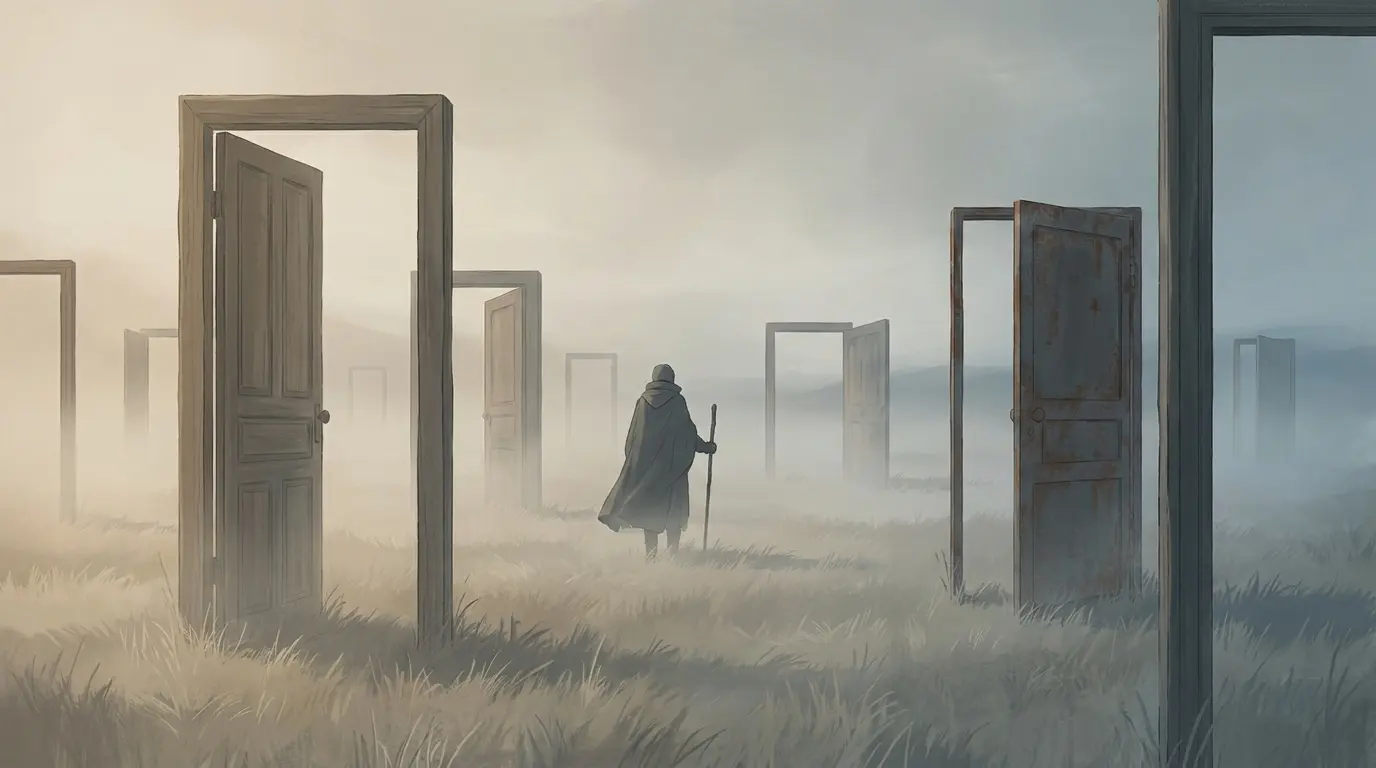
However, with the arrival of modernity and the transition into the contemporary era, everything changed radically. The unprecedented growth of communication, the astonishing diversity of beliefs, ideologies, and epistemic systems, along with an unprecedented individualism that opened the door to countless models of living, together gave rise to an entirely different world. This unprecedented plurality of options could lead to nothing but uncertainty. The dogmatic certainty of the traditional age became an unattainable dream, and many people—however difficult it may have been—tried to learn how to live with uncertainty. This goal, however, was not achievable for everyone, particularly those with less cognitive flexibility.
The Homeless Mind; The Fate of Man in an Age of Uncertainty
Under these conditions, everything once taken for granted becomes the starting point of debate, the very first premise up for discussion. Our assumptions about human nature must be reexamined, and this reexamination inevitably involves engaging with the full range of ideas and “isms,” both Eastern and Western—a discussion with no clear end in sight. Everything we once called “life values”—the things that shaped the contours of human existence—must now be re-examined, and no ready-made package is acceptable to today’s human being.
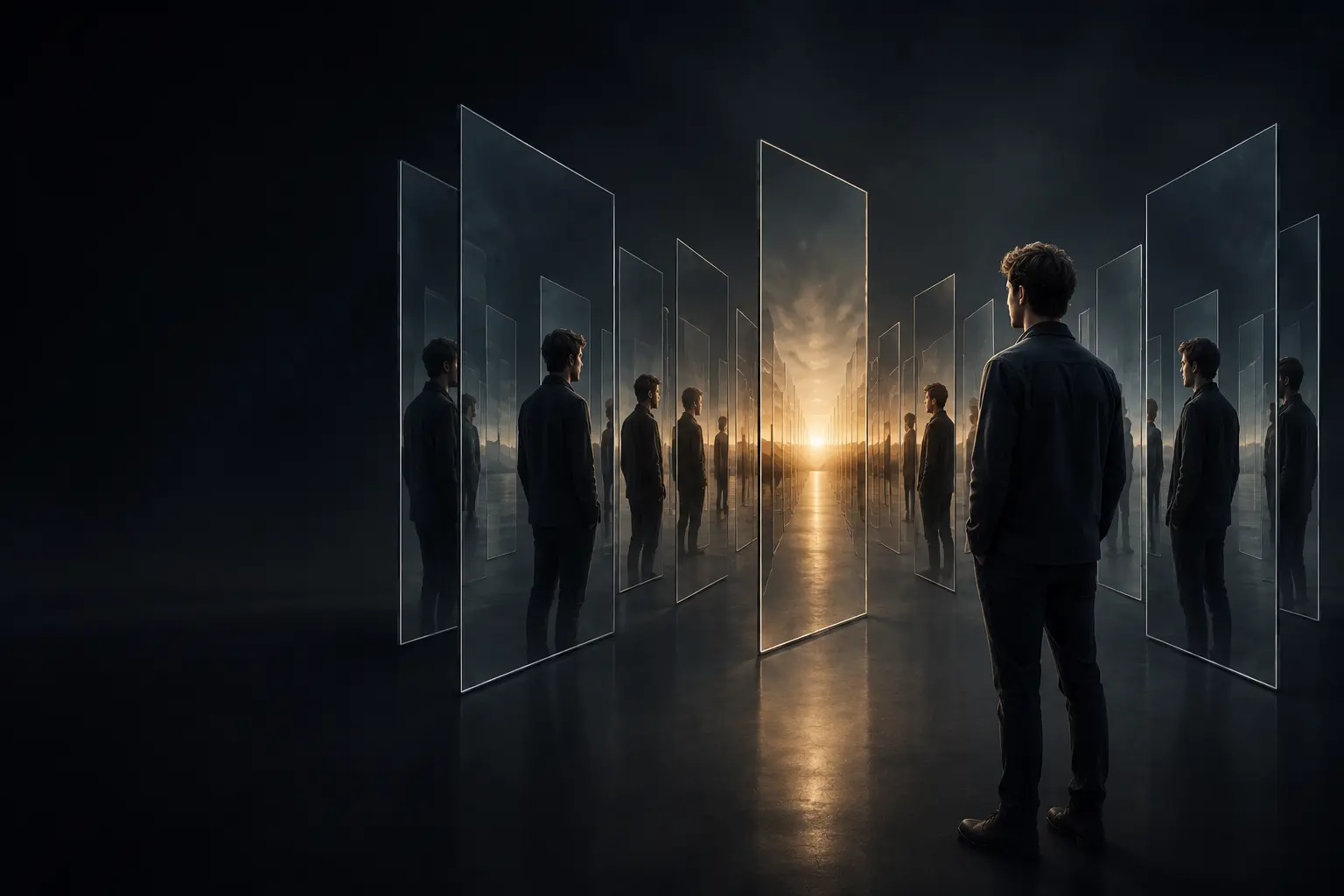
It is clear that adopting a thoughtful position on all these questions is no simple task. Constructing such a comprehensive worldview imposes a heavy cognitive burden, one that typically exceeds the capacity of an ordinary individual. Moreover, the individualism of contemporary humanity resists accepting any pre-packaged worldview. The usual result is a patchwork identity—one in which each piece belongs to a different framework—leaving us with a curated self, a self that the individual believes to have constructed through their own agency.
This kind of approach faces a serious challenge when confronting the important question of life’s meaning. Previous answers are no longer convincing, and traditional meanings are no longer taken as self-evident. Faced with the choice between finding meaning and constructing meaning, individuals today tend to lean toward construction—yet building a novel meaning for one’s life demands a heavy cognitive cost, one that exceeds what an ordinary person can bear. In the end, many people in the contemporary era find themselves wandering in a state of confusion, facing a multitude of options, none of which seems, on its own, acceptable or sufficient. In this setting, human beings—as Peter Berger put it—become “homeless minds.” In a world of uncertainty, the meaning of life becomes a deeply personal task, one whose success is vital. Achieving this goal requires, on one hand, drawing on the full capacity of all available sources of meaning, and on the other hand, breaking free from the confines of individualism and opening new horizons through deep dialogue with fellow inhabitants of this uncertain world.
If you are interested in bulding a meaningful life, join our course
How to build a meaningful life?