In his memoir, Nothing to Be Frightened Of, Julian Barnes offers a confession that haunts the modern psyche: “I don’t believe in God, but I miss Him.” This paradox marks our departure from an era where the divine was the very air we breathed, a background context we could not ignore. To trace how we arrived at this longing, Charles Taylor offers a genealogy of the modern soul, mapping the subtle shifts that moved us from a world where faith was inevitable to one where it is an uphill battle.
The core mystery Taylor addresses is why belief was virtually unavoidable in 1500 CE, yet feels like a contested choice in 2000 CE. He argues that we have not simply “lost” our faith through scientific progress, but have undergone a deep structural shift in our “conditions of belief.” By walking through this transformation, we can begin to see why the modern search for meaning feels so fragile and, at times, so haunted by what we have left behind.
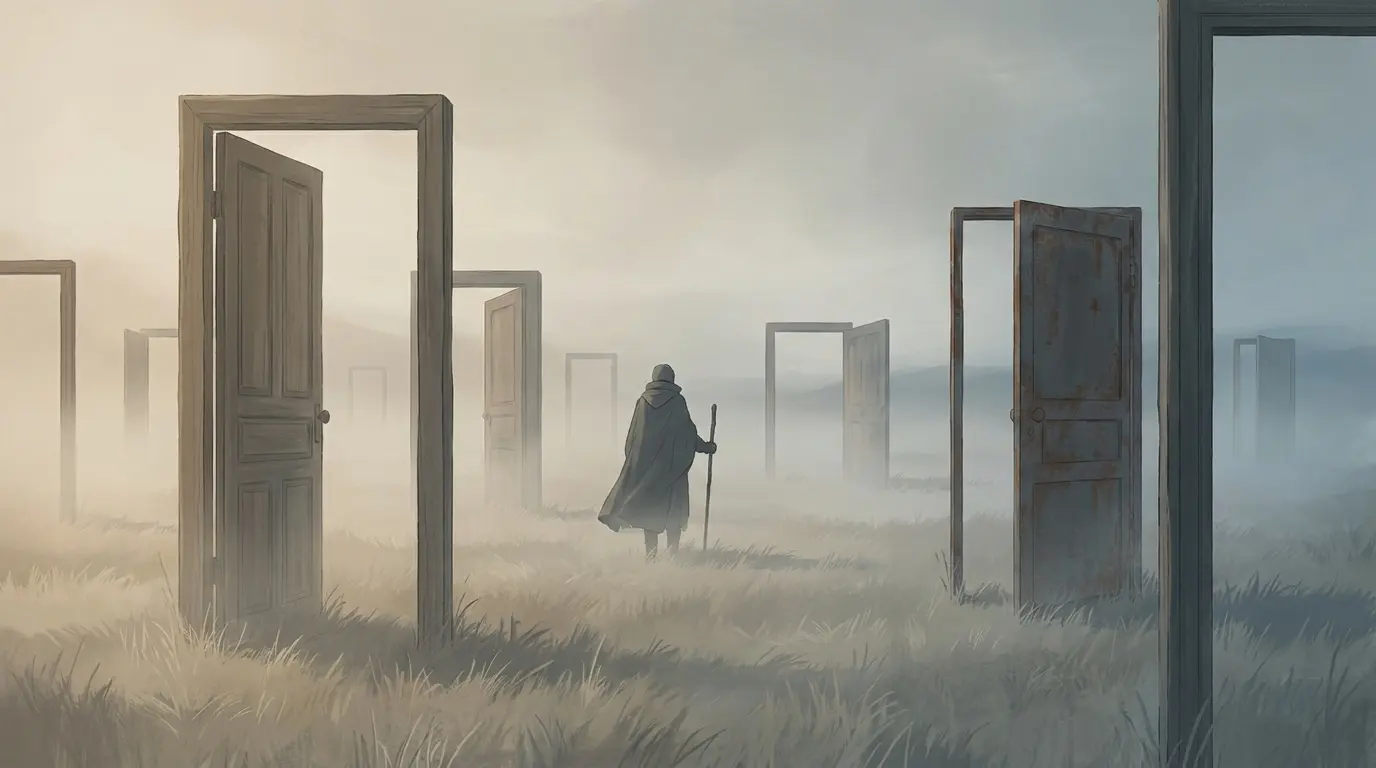
Faith Is Now Just One “Option” Among Many
Taylor defines our current era as “secularism in the third sense,” a state where religious belief is no longer the default setting of society. In the pre-modern world, faith was the unchallenged framework for all of life, but today it must compete in a crowded marketplace of ideas. This shift means that even for the most devout, the presence of other valid life-paths is an inescapable reality that shapes how they hold their convictions.
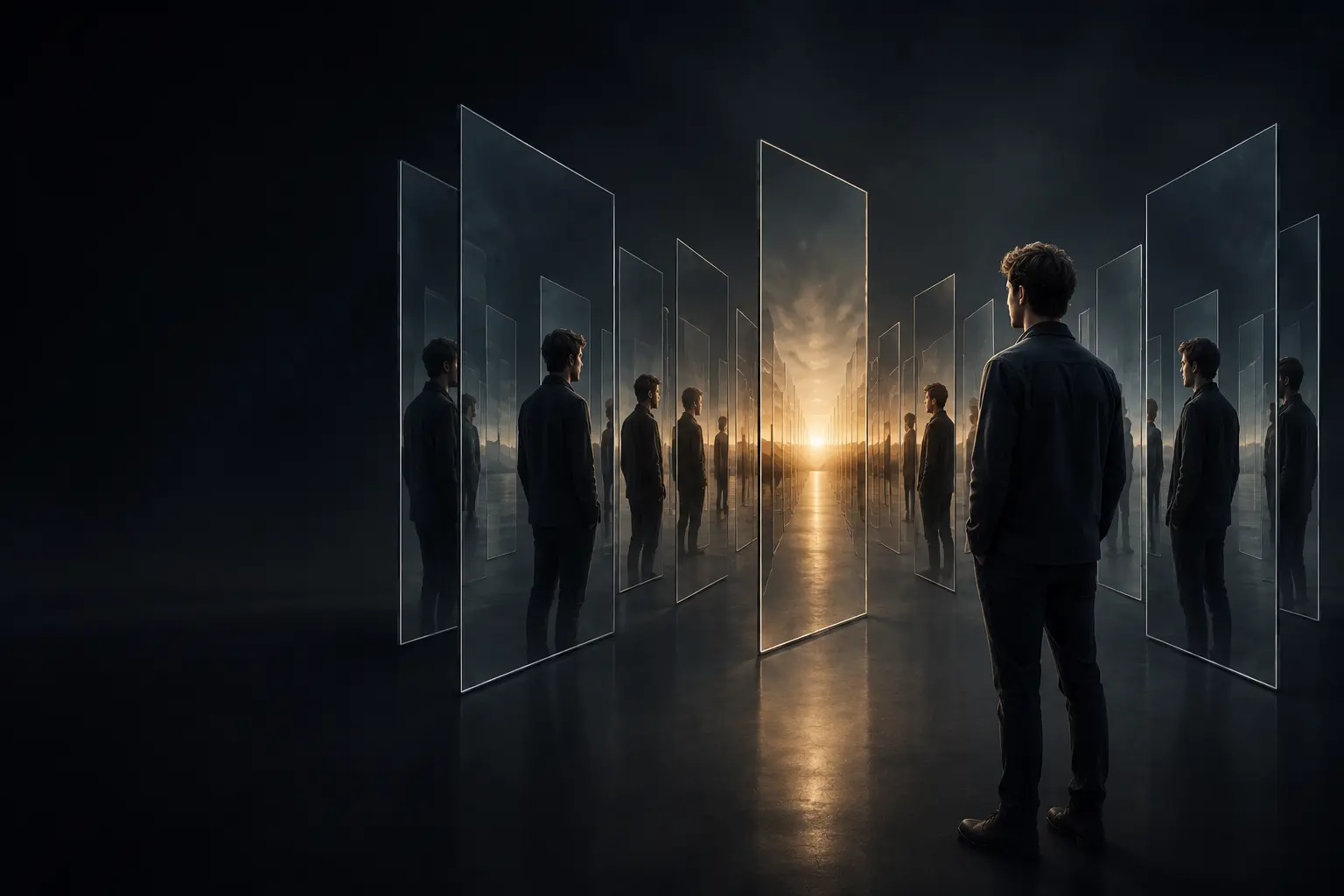
This environment creates a state of “fragilization,” where the simple fact of pluralism weakens our sense of certainty. We constantly encounter people we respect—friends, scholars, or neighbors—who live full lives without any reference to the transcendent. Their existence makes our own certainties feel more brittle, as belief and unbelief now “jostle” and challenge one another in every corner of the public square.
“Belief in God is no longer axiomatic. There are alternatives.”
The Invention of the “Buffered Self”
The move from the “porous self” to the “buffered self” remains the defining threshold of our modern identity. In the pre-modern world, the self was thin and vulnerable to external spiritual powers, spirits, and demons that could cross the boundary of the soul without invitation. Today’s buffered self, however, feels self-contained and resistant, effectively disenchanting the world and pushing the supernatural to a safe, cold distance where it can no longer “intrude.”
This internal shift is driven by a transformation in our “social imaginary,” a term Taylor uses to describe something much deeper than a mere intellectual theory. It is the pre-theoretical way we imagine our social existence and how we fit together with our fellows in the world. It is the “feel” of reality—the background understanding that tells us what is possible and what is absurd—long before we sit down to reason about it.
We Don’t Believe Instead of Doubting; We Believe While Doubting
Modernity has not merely changed the objects of our faith; it has fundamentally rewired the process of how we believe. Even the staunchest believer today lives with the “cognitional status” of knowing that their position is one of many contested options. Certainty is no longer a solid floor beneath our feet but a choice made in a space where every answer is shadowed by a question.
This means the modern believer lives in a constant, quiet tension that would have been alien to a peasant in 1500. The awareness of alternative worldviews ensures that doubt is no longer the enemy of faith, but its constant, necessary companion. We occupy a cultural landscape where every position is cross-pressured, and the very act of believing requires an ongoing negotiation with the possibility of being wrong.
“Nowadays ‘we don’t believe instead of doubting; we believe while doubting.'”
The “Therapeutic” Shift: From Sin to Sickness
As our culture has taken an “anthropocentric” or human-centered turn, the traditional vocabulary of religion has been largely reinterpreted to focus on human flourishing. This shift is most visible in the way we have traded the language of moral responsibility for the language of clinical care. The traditional concept of “Sin,” once defined as a defiant disobedience to a divine King, has been replaced by the concept of “Sickness” or psychological wounding.
This therapeutic outlook inevitably alters our perception of the divine character, moving us away from a “King” who judges toward a being of “pure love.” God is reimagined as an “Architect” whose primary concern is the support of our earthly potential rather than the satisfaction of divine justice. Consequently, the traditional fear of Hell has largely withered in the modern social imaginary, as a “wrathful” God feels incompatible with a culture focused on therapy and care.
Secularism as an “Authentic Development” of the Gospel
Taylor offers the counter-intuitive argument that modern secular culture might actually fulfill certain Christian goals better than the era of “Christendom” ever did. He suggests that the breakout from strictly religious political structures was a necessary condition for the development of certain moral values. In this view, modernity is not a simple rejection of the Gospel, but a complex, and sometimes humbling, evolution of its core principles.
Universal human rights serve as the primary example of this “radical unconditionality” that religious states struggled to maintain. Historically, it was difficult for a “Christian” society to grant full equality to those outside its moral or theological pale, such as atheists, practitioners of alien religions, or homosexuals. By moving toward a secular political framework, society achieved a level of justice and inclusion that Taylor sees as a true, if unintended, fruit of the original Gospel message.
“In relation to the earlier forms of Christian culture, we have to face the humbling realization that the breakout was a necessary condition of the development.”
Conclusion: The Future of the Personal Quest
We have entered the “Age of Authenticity,” a time when spirituality is defined by “autonomous exploration” rather than institutional surrender. Modern seekers prioritize the inner voice—whether defined as reason or feeling—as the ultimate authority in their search for the sacred. While this personal quest may eventually lead back to traditional community, it must always begin from an individual point of choice and self-discovery.
However, Taylor’s genealogy is not without its critics, who argue that his “meta-narrative” focuses too heavily on Western Latin Christendom while ignoring the rise of Religious Fundamentalism. Unlike the buffered, doubting seeker, the fundamentalist often rejects the anthropocentric shift entirely, viewing faith not as an “option” but as an absolute return to divine authority. This movement suggests that for many, the disenchanted, buffered self is not a liberation but a cage they are determined to break.
Finally, we must consider whether the very dichotomy between “belief” and “unbelief” is still a useful tool for measurement. Some critics argue that the “belief” of 1500 and the “belief” of 2000 are so different in content and process that they are effectively two different ways of being human. As you navigate your own path, you might ask yourself: Do you feel “buffered,” protected by the walls of reason, or “porous,” still sensing a transcendent weight that pulls at the edges of your self-contained world?
Read the Full Version of the article
And If you are interested in the transformation of Traditional Religions to the Postmodern World and the authentic living in our age, join our courses:
Spirituality: From traditional religions to Post-Modern World
Living authentically: From traditional world to living my truth