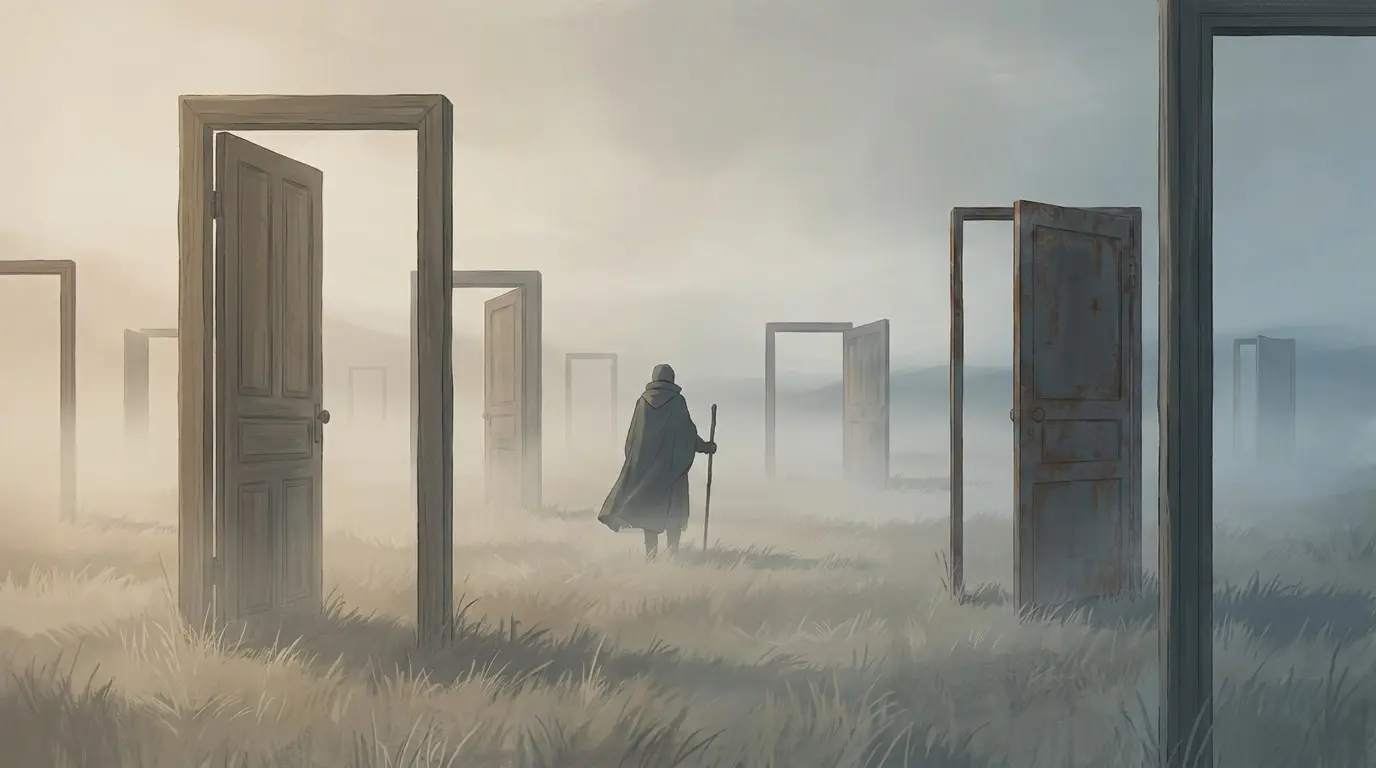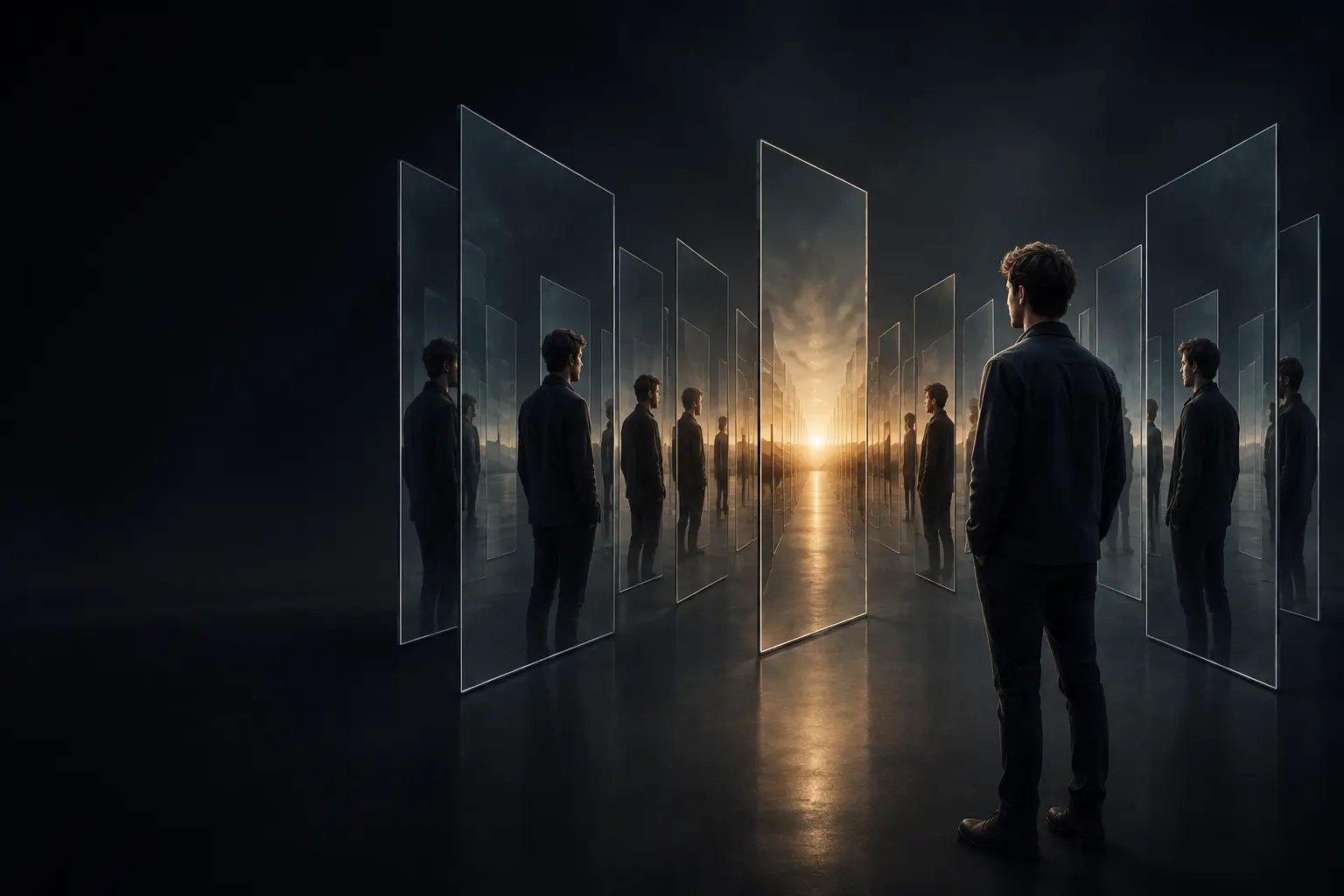
Chasing the wind?
Is human life meaningful, or is it merely a futile pursuit akin to “chasing the wind”? The problem of absurdity and the quest for meaning remain central to philosophical inquiry. In this paper, I argue that if human life is structured around narrative, and if narrative is epistemically flawed, then the meaning we derive from our lives is systematically unreliable—rendering life absurd. My account unfolds in four steps: (1) (most) humans are narrative beings; (2) narratives are epistemically unreliable; (3) a life grounded in epistemic falsehood lacks meaning; and (4) therefore, life is meaningless and absurd. This account bridges epistemological nihilism and existential nihilism, grounded in the concept of narrative. I also examine three influential accounts of absurdity: (1) the purposelessness of the universe, (2) the systematic gap between human desire and the indifferent world, and (3) the lack of rational foundations for life. I show how a narrative account is a new way of thinking about absurdity. I conclude by suggesting a possible pathway out of this absurdity, involving a shift from propositional knowledge to holistic understanding, and a more modest conception of truth.
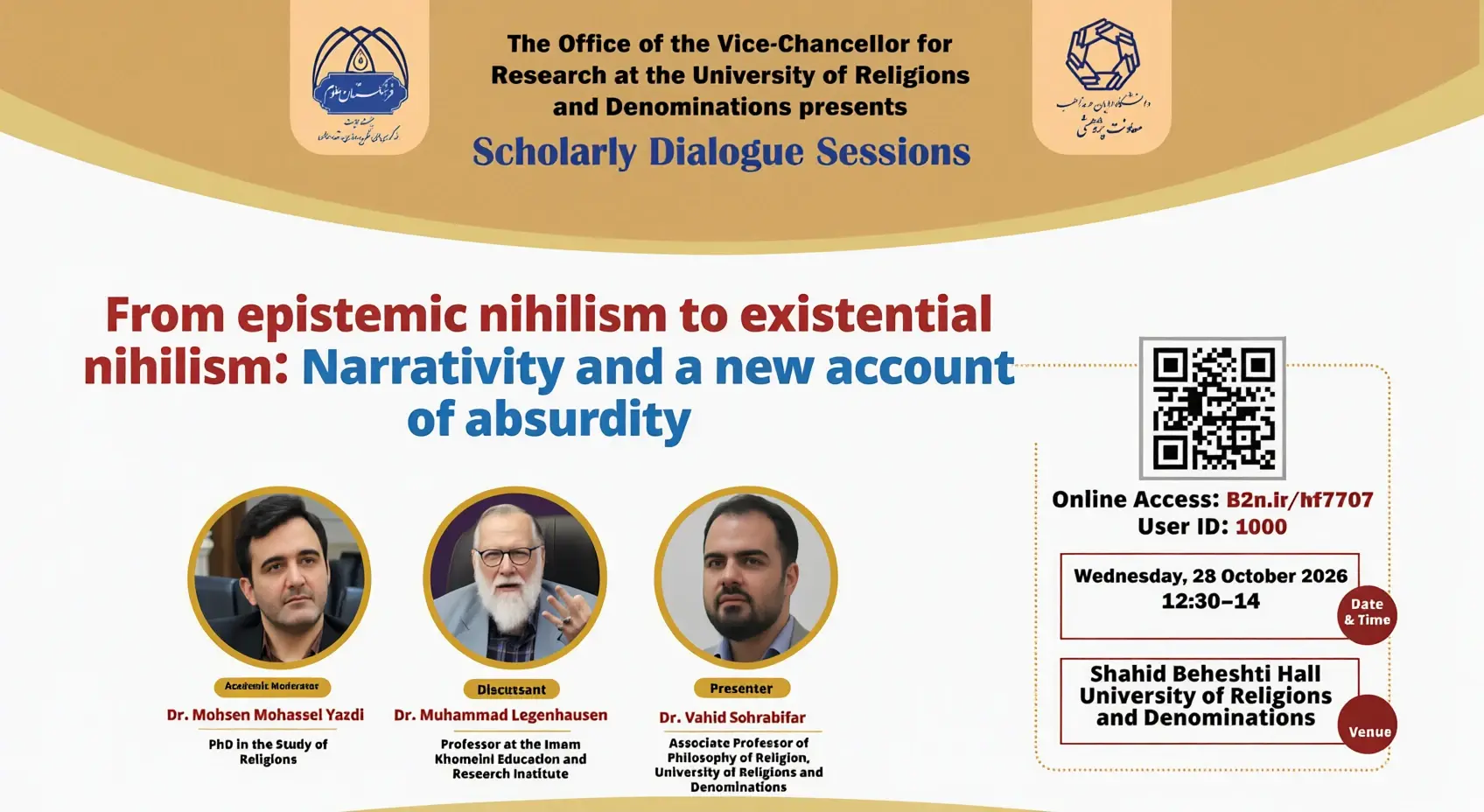
Scholarly Dialogue Session
Presenter:
Dr. Vahid Sohrabifar
Associate Professor of Philosophy of Religion, University of Religions and Denominations
Discussant:
Professor, Imam Khomeini Education and Research Institute
Academic Moderator:
Dr. Mohsen Mohassel Yazdi
PhD in Religious Studies
Date and Time: Wednesday, 28 October 2026, at 12:30 p.m.
Venue: Shahid Beheshti Hall, University of Religions and Denominations
Language: English
Online Access:
https://el.urd.ac.ir/lms/m/897
Username: Your first and last name
Password:
1000
The question of meaning in life
The question of absurdity and meaning in life are central concerns for many thinkers. In the wake of the catastrophic events of the twentieth century, different articulations of absurdity have emerged. Albert Camus argues that the primary task of philosophy is to discuss the worthwhileness of life and, compared to this question, all the other philosophical questions are secondary (Camus, 1979, p. 11).
This expectation from philosophy echoes in the works of others. Critchley claims that philosophy begins with disappointment, notably religious and political disappointments, and that “religious disappointment provokes the problem of meaning, namely, what is the meaning of life in the absence of religious belief?” (Critchley, 2004, p. 2).
Various responses have been offered to the meaning-of-life question. Some maintain that life is meaningful, although they disagree about how meaning is secured; these views are often categorized into supernaturalism and naturalism (Metz, 2013). Others conclude that life has no inherent meaning: “I think that life, like the lilies of the field, has no meaning” (Strawson, 2022, p. 75).
In what follows, I want to briefly overview three articulations of absurdity based on the ideas of three thinkers from the 20th century. Then, I will present my account of absurdity. This account is not a formal proof but a gathering of evidence to sketch a novel perspective on the absurdity of life.
A new account of absurdity
I articulate a new account of absurdity. The key concept for this account is narrative. I begin with the idea that humans are narrative beings and show that narrative is epistemologically unreliable -epistemological nihilism. Then, I elaborate on the relationship between epistemological nihilism and existential nihilism. This articulation has four steps:
(1) (Most) Humans are narrative beings
(2) Narratives are epistemically unreliable
(3) A life grounded in epistemic falsehood lacks meaning
(4) Therefore, life is meaningless and absurd.
My account of absurdity is not a logical argument. It shows the plausibility of the absurdity of life. However, is there a possible way to stay against absurdity? I think there is. I believe we need to change the way we think about meaning in life and its relationship to objective elements. I elaborate on this view in two points: The shift from knowledge to understanding, and rethinking the conception of truth.
Three versions of absurdity
In this talk, I overviewed three versions of absurdity: (1) the purposelessness of the universe, (2) the systematic gap between human desire and the indifferent world, and (3) the lack of rational foundations for life. Then, I presented a new account of absurdity. This account relies on narrativity and tries to build a bridge between epistemological nihilism and existential nihilism. My account consists of four steps: (1) (most) humans are narrative beings; (2) narratives are epistemically unreliable; (3) a life grounded in epistemic falsehood lacks meaning; and (4) therefore, life is meaningless and absurd. I showed that the main characteristics of narrative -selectivity, unification, isomorphism, repetition, and revision- make it epistemologically unreliable. Considering that a life without objective element-truth/value/purpose- is not meaningful, then the life is absurd because most of the humans are narrative beings and they have narrative self and narrative morality.
A humbler conception of truth
The outcome of this account is not confined to meaning in life; it can be extended to other aspects of human life like morality and self-image, etc. In the next, I tried to re-address the question with some epistemological considerations. I suggested that understanding is a better suit for the question of meaning in life than knowledge, and it has the same characteristic as narrative- selectivity. Moreover, taking a humbler conception of truth helps us to satisfy the objective condition of meaning in life through narrative and preserve the meaningfulness of life.